The apple-growing Ito family of Forestville, California by Beth Winegarner

(This is NOT a bite-sized entry, apologies; it turned into something much bigger)

I’ve been researching my hometown, Forestville, for some writing I’m working on. I was looking through the California Newspaper Digital Collection (CDNC), because the Wikipedia article on the town mentions some kind of fire that took place in the early 20th Century and destroyed most of the early buildings. I didn’t definitively find any reports (though it could refer to this fire at the Lehn Winery in September of 1915 that resulted in a bunch of drunk hogs). 

But I did find something else: Information about a multigenerational Japanese family that ran an apple farm in Forestville from sometime in the 1910s until after World War II. I’d like to share what I’ve learned, because it’s a story I never learned growing up there and I really wish I had. 

Hichijiro Ito was born in Japan on May 10, 1875 (as I’m writing this, his birthday would have been yesterday). His mother’s name was Ecishi; I’m not sure what his father’s name was. His wife, Tomiye Mizutani, was also born in Japan, likely in 1881 or 1883. She most likely married Hichijiro in Japan and immigrated with him, though I was unable to find very much about her life. They had a son, Yoshinobu, who was born in Japan on October 12, 1905. 

The Ito family came to the U.S. and settled in Forestville sometime in the 1910s. They set up an apple farming operation on Covey Road near Davis Road, where El Molino High School was later built. It’s worth noting that the apples were Gravensteins, which were a popular Sonoma County crop, brought to the U.S. by the Russians who settled at Fort Ross in the early 19th Century). 

On November 7, 1923, a fire broke out on the Ito property, destroying two houses and damaging the Ito family’s apple-drying machine. The dryer had been used that day, but the boy who tended the kiln had made sure the fire was out before he left for the night. Neighbors said the fire started on the roof around 1 a.m., and a reporter suggested that a spark from the kiln became lodged in the vent and later ignited the roof. 

Most critically, one of Hichijiro and Tomiye’s sons, likely Yoshinobu, was in danger from the fire. He was asleep in their home, but an unidentified someone ran into the house and pulled him from his bed. 

The Oakland Tribune reported that the Ito dryer was located next door to the Sebastopol Apple Growers’ Union packing plant (another paper identifies it as the The Forestville Union Packing house). The fire could have spread to the packing house — and to the rest of the town —if not for “hundreds of people” who woke and came out to help fight the fire. Forestville, then and now, was an unincorporated part of Sonoma County and didn’t have its own (volunteer) fire department until 1938, so neighbors had to rely on each other when fires broke out. 

Aside from the apple dryer and two homes, the fire consumed 20 tons of green apples and eight and a half tons of dried apples. Newspapers reported that the fire caused about $5,000 in damage (almost $100,000 in today’s dollars), $3,800 of which was covered by insurance. 

The Santa Rosa Press Democrat reported that, after the fire, Hichijiro “is ready to rebuild, providing the residents do not object. The residents will no doubt object, as the drier was located near the heart of the town, which was in immediate danger, due to the inadequate fire fighting apparatus.”

I can’t help but wonder if that was the only reason neighbors might have objected. Although World War II was almost two decades away, anti-Japanese and anti-Asian sentiment was well entrenched across California.

Still, it appears the Itos rebuilt their operation. In July 1931, Hichijiro and his son Yoshinobu certified themselves as co-owners of a “retail green and dried fruit business under the name of H. Ito and Son” in Forestville. 
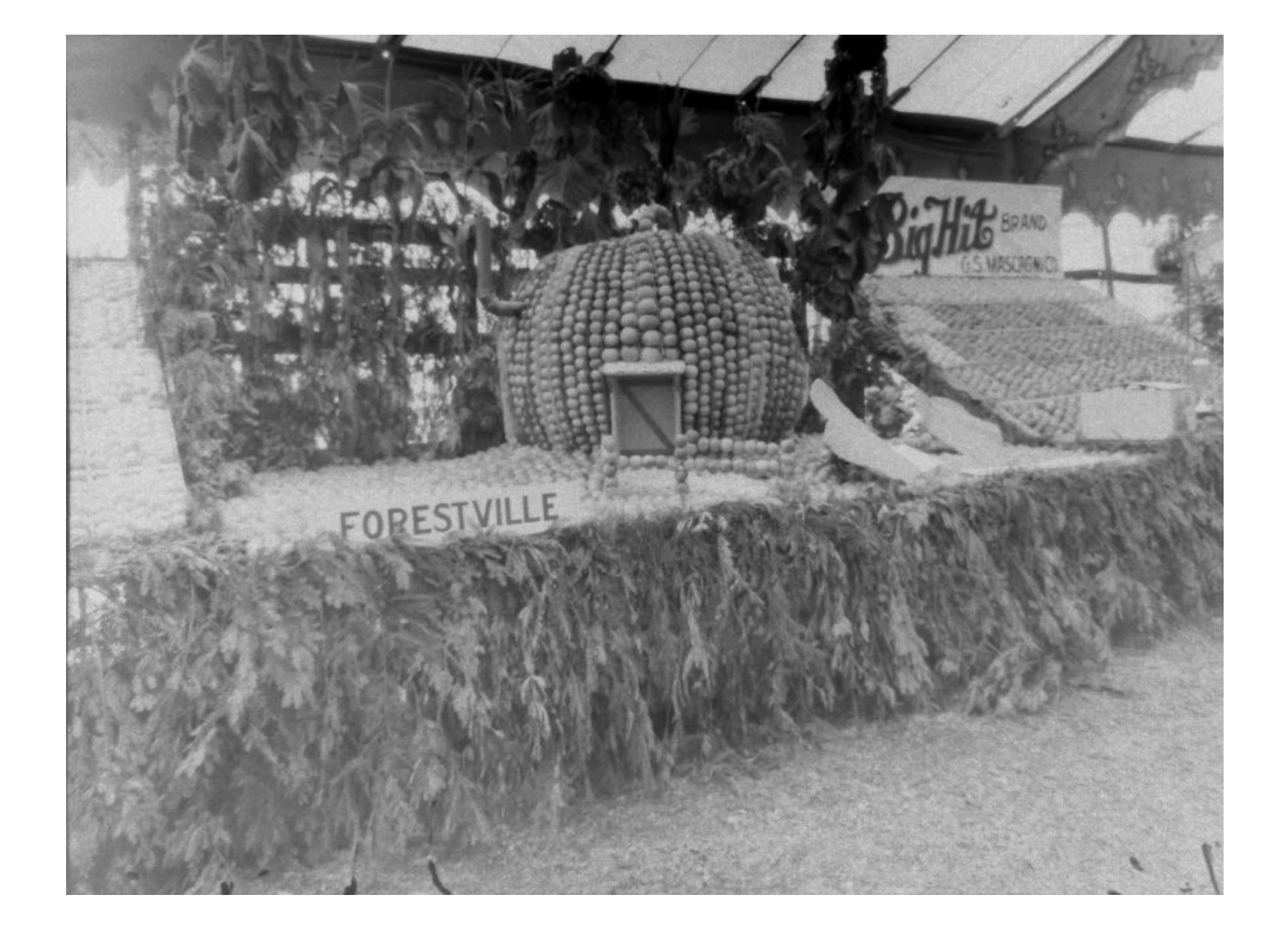
Circa 1930 Gravenstein Apple Show display of an huge apple, made of apples for the town of Forestville exhibit. Photo by William S. Borba.

Another member of the Ito family appears in the 1930 census, a boy named Kazuo, born December 8, 1922 and identified as Hichijiro’s grandson. Hichijiro and Tomiye had another son before Yoshinobu, but I have not been able to find much information on who he was. (He’s identified in this interview by the American name Frank, and in Kazuo’s obituary as Yoshimatsu.)

In mid-January 1932, Yoshinobu Ito, then 26, and Tsugive Hatanaka, 18, of Oakland, took out a marriage license. They were formally married on January 21, 1932, likely on the Ito property in Forestville.

The Santa Rosa Press Democrat reported

Elaborate Japanese Wedding Is Performed at Forestville

FORESTVILLE, Jan. 21. An elaborate Japanese wedding took place here Sunday, uniting Tsugiye Hatanaka and Johnnie Y. Ito in marriage. All members of the bridal party and the minister were Japanese. The Rev. T. Friljii of the Sebastopol Japanese Methodist church performed the ceremony. Following the wedding, 200 guests were entertained at a bridal dinner with K. Akutagawa as master of ceremonies. Talks were given in both American and Japanese. The bride is a daughter of Mr. and Mrs. Hatanaka of Oakland. She was dressed in a white satin gown with a beautiful lace veil. The veil was held in place by a cap of lace and pearls. The bride was attended by the following bridesmaids and flower girls: Miss Jlatanaka, Miss Xishioka, Miss Kobuka, Miss Takemoto. Miss Ikeda, Miss Akiya and one of her younger sisters. Ro was supported by cousin, Tommy Ito. The groom is the youngest son of Mr. and Mrs. H. Ito and attended schools here. He is associated with his father in fruit growing and packing. The couple left Sunday night for a honeymoon trip to Los Angeles and other parts of southern California.

Yoshinobu and Tsugiye had two sons, Hiromu, born in May 1934, and Akira, born in May 1939. 

On July 2, 1940, the Oakland Tribune ran an article about a rivalry between apple growers from Sonoma County: 

Two produce firms this morning reported the receipt of Gravenstein apples, the first to be received in Oakland for the current season. Jack Oliver, of W. A. Rouse & Company, received a shipment from H. Ito, rancher of Forestville, Sonoma County. Ito usually "beats" his competitors. This year, however, V. Sangiacomo, of Sonoma, shipped to Angeli Brothers on the same day They were put on display by Joe Cellini of that firm. The fruit was quoted for from $1.85 to $2 per lug.
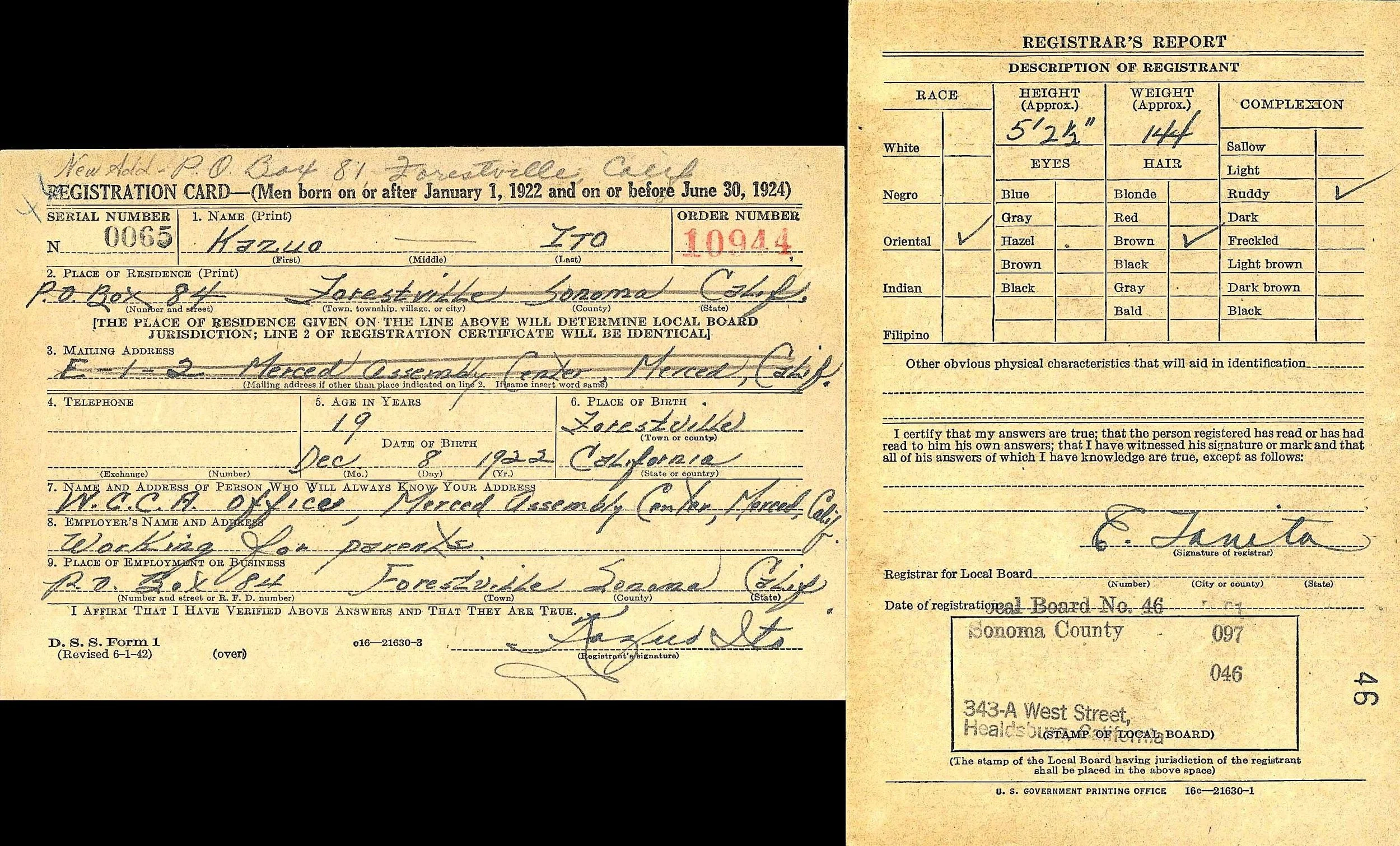
Kazuo graduated from Analy High School in Sebastopol in 1940. After World War II began, at 19 and a U.S. Citizen, he registered for the U.S. Draft. His registration card lists him as five feet two and a half inches tall and 144 pounds, with brown hair and a ruddy complexion. He reported that he was “working for parents” and gave an address of P.O. Box 84 in Forestville. He also listed the Merced Assembly Center in Merced, California as an address, but crossed it out. 

The Merced Assembly Center was a temporary internment camp for Japanese Americans that operated for about five months between May and September of 1942 before prisoners were sent elsewhere. The U.S. kept Kazuo along with the rest of his family in Merced before sending them on to “Camp Amache” or the Granada War Relocation Center in Granada, Colorado, hundreds of miles from Forestville. 

They were registered in Granada on September 9, 1942. Hichijiro was 67 and Tomiye was around 60. The little boys, Hiromu and Akira, were 8 and 3. 

A friend of the family, Tom Perry, said in a 2003 interview that his parents took care of the Ito ranch while the family was imprisoned. He grew up playing with one of the Ito kids, whom he identifies as Keith (probably Hiromu). Perry said: 

Anyway, I know that Johnny (Yoshinobu) ran the dryer and he and Sue (Tsugiye) lived on our ranch there for a while before the war and before they bought a place on Hurlbut Avenue (in Sebastopol). Their sons were Steve and Keith, who was just a few months younger than me, and Keith was my first playmate. I have a number of pictures where we were toddlers together. And Keith and I went all through school together, through grammar school, high school. I was four years old when the war began, so I don’t remember much of what was going on. I remember my mom talking about them being back in the camps. I knew about camping, that sounded like fun. So that was how much I knew back in those days when the war started and the internment situation took place. 

While most of the Ito family were in Colorado, Hichijiro was accused of criminal espionage and shuffled around the country.

Tom Perry recalled: 

So Grandpa disappeared. [He] was accused of being a spy. He was sent first to Louisiana, then to New Mexico. He was accused of having maps in his place. Maps! If you have maps in your house you’re obviously suspicious, and he was accused of having $40,000 sewn into his clothing. $40,000 in those days would be about a million today. Not too likely, but this was the story. Supposedly he was convicted. So he wasn’t able to join his family until 1944, when he joined the rest of the family in Amache. I’m not sure whether he was acquitted later. It was rumored this was the case, but for sure he was put away for some time for “committing the crime.”

Perry’s mom, Lea Perry, wrote letters back and forth with Kazuo while he was in Merced and later Granada, discussing and coordinating operations of the Ito ranch in Forestville from 1942 until they were released in 1945. Incredibly, all of these letters were donated and digitized, and are available to read online in Sonoma State University’s digital collection. The Itos apparently sent the Perrys small amounts of money in thanks for running the ranch in their absence, and at least once, Lea told them she could not accept the money, knowing they were receiving so little in the camp. 

Lea also sent them gifts. Tomiye in particular loved persimmons, and Lea would send some on occasion. Tom Perry recalls: 

In fact, I can still remember as a five year old, the persimmon tree. I didn’t know what they were so I bit into one one day, and (laughs) thought, this is not to eat. When they got ripe, Grandma Ito liked persimmons, so my mom would send them to her. Also apples and dried fruit. Of course, it was really appreciated. I remember one of the letters told about when they were in Merced, she shipped down a box of apples and Kaz said, “I grew up with these apples. We would even throw them from time to time, as kids, like baseballs.” He said, “I never realized how good they are and what a treat it was to have them.”

The Itos were released from detention on September 26, 1945 and most, if not all, returned to Forestville and Sebastopol.

It helped that the Perry family had been taking good care of their ranch and their houses in both towns. Tom also thought that the Itos had perhaps faced less racism in Sonoma County than Japanese people had in other parts of the country, possibly because they had been established in the area so long before the war. “I think that there were enough people here who knew the Japanese and what good people they were,” Perry said. “Also, people like my folks who took care of ranches, made people feel that their home was here, and that their places were here and they were cared for.”
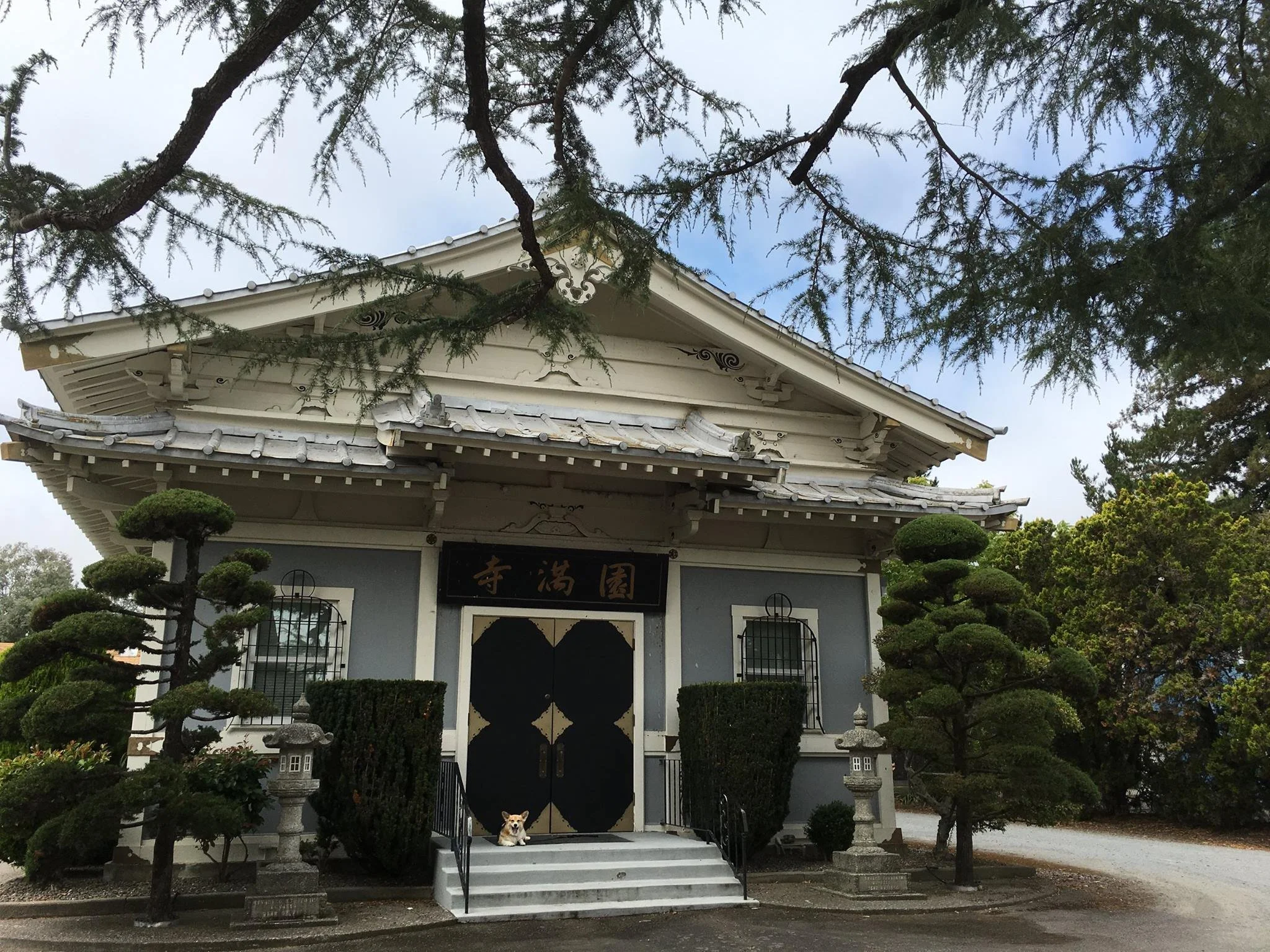
Enmanji Buddhist Temple in Sebastopol, California.

Perry also mentioned that Hichijiro was involved in establishing the Enmanji Buddhist Temple in Sebastopol. Before the temple, a Buddhist Sunday school and Japanese language school launched in 1926, and in 1928 a minister from the Buddhist Mission of North America visited the area to begin missionary work. Japanese Sonoma County residents met in 1932 to talk about establishing their own temple, and purchased a house in Sebastopol, opening the first temple space in 1933. Its first minister was Rev. Shodo Goto.

The current building, however, has an even more amazing story: It was constructed by workers with the Manchurian Railroad Company and used as part of their exhibit hall at the Chicago World's Fair in 1933. After the fair, the company donated the building to the Buddhist Mission of North America, which in turn offered it to the Sonoma County folks. It was dismantled in Chicago and transported by rail to Sebastopol, where it was rebuilt — without the use of nails — in early 1934. 

Difficult news continued to follow the Ito family after the war. On June 30, 1949, a newspaper reported that “The friends of Kazuo Ito will be sorry to hear that he is confined in Oak Knoll hospital. He would appreciate hearing from different ones.” And in early November 1950, Hichijiro was released from Palm Drive Hospital in Sebastopol after undergoing two weeks of treatment for burns. 

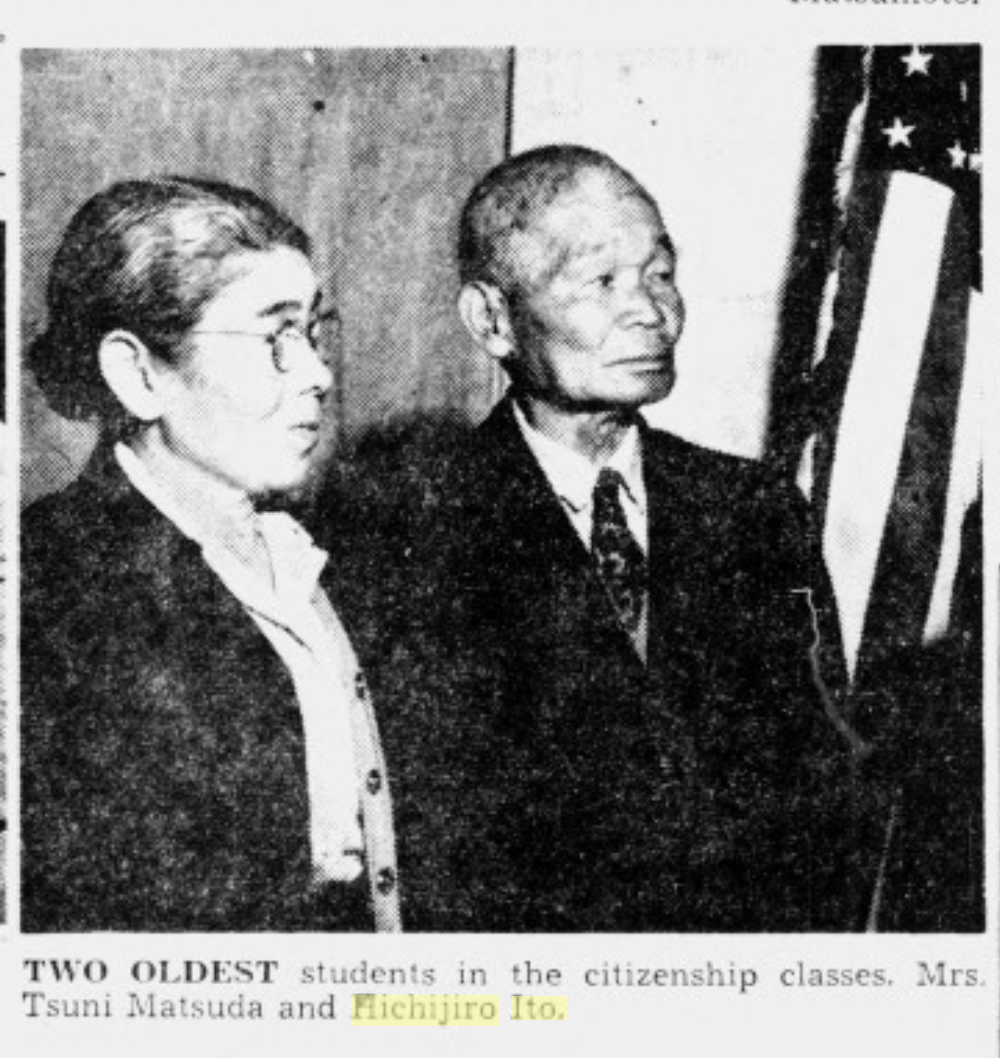
More cheerfully, Hichijiro was featured in a 1953 Press Democrat article about a group of 76 local Japanese Americans finishing a citizenship class so they could become naturalized in the U.S. Such classes were made possible by the 1952 McCarran-Walter Act, which made it easier for Asians to immigrate to the U.S., and for those already in the U.S. to become citizens. Among his classmates, Hichijiro was the oldest, at 78. 

Yoshinobu became a citizen in November 1954.
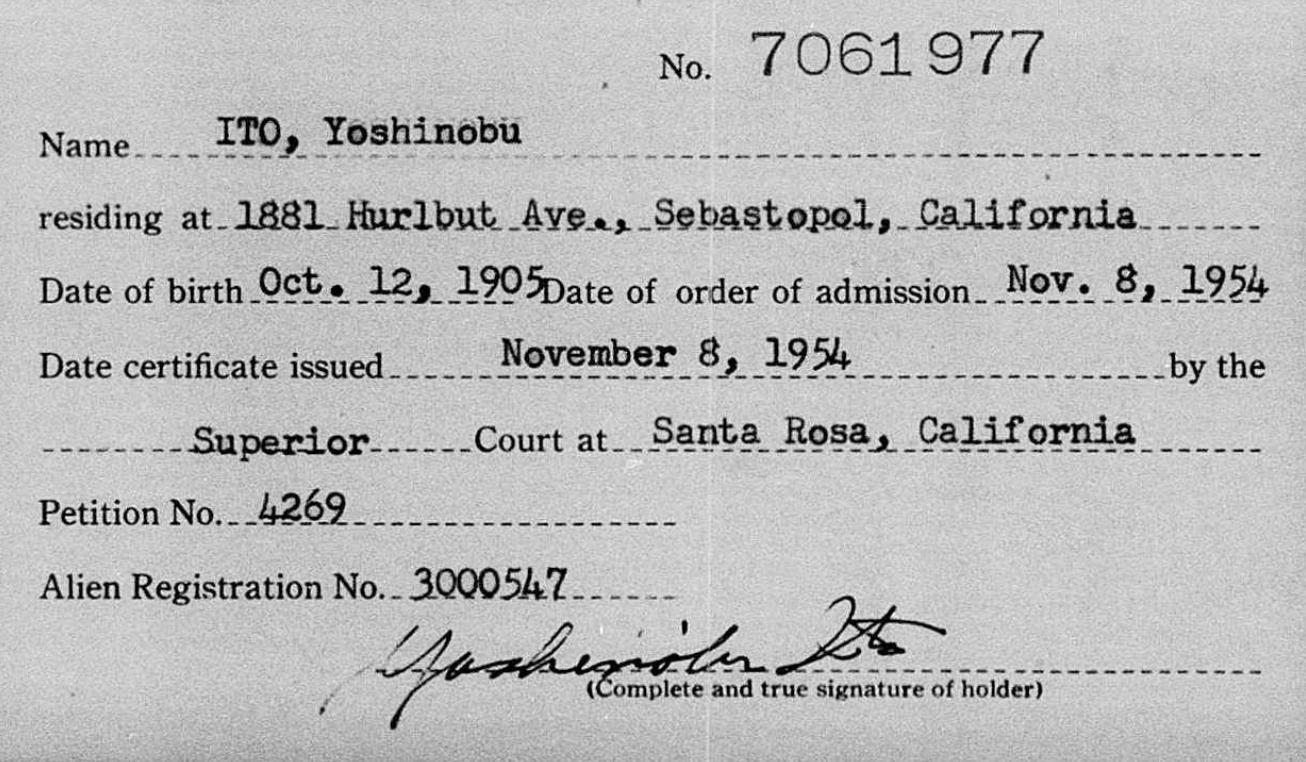
Kazuo was the first of the Forestville Ito clan to die, on May 5, 1955, at age 32. The Enmanji Temple hosted his wake, and his ashes were committed at Chapel of the Chimes in Santa Rosa, according to the Press Democrat. 

Hichijiro followed a few years later, in February 1958, at the age of 83. Like Kazuo, his wake services took place at Enmanji and his ashes were committed at Chapel of the Chimes. The Press Democrat reported: “Mr. Ito died Wednesday in a Santa Rosa hospital. He lived in Forestville 45 years after coming from Japan. He was an apple rancher on Covey Rd. He is survived by his wife, Tomie Ito, Forestville; sons, Yoshinatsu Ito, Sacramento, Yoshinobu Ito and Tom Ito, both of Sebastopol, and eight grandchildren.”

Yoshinobu died February 10, 1994 at the age of 88. Enmanji hosted his wake, and his ashes were inurned at Pleasant Hill Cemetery (now Pleasant Hills Memorial Park) in Sebastopol. The Press Democrat reported: “A native of Japan, he came to Forestville in 1920 to join his father in running an apple dryer and apple orchard. He was a member of the Enmanji Buddhist Church and the Japanese American Citizens League. Survivors include his wife, Tsugiye Ho of Sebastopol; his children, Steven Ito of Sacramento, Keith Ito of Concord, Philip Ito of Santa Rosa, Mildred Milne, Ft. Bragg and Katharine Legro of Calistoga; seven grandchildren and one great granddaughter.” 

Tsugiye died in May 2022, and is also inurned at Pleasant Hill. 

I regret that there are so many gaps in this account — I wasn’t able to find much information on Yoshinatsu or Tom Ito, or follow the lives of Hiromu or Akira, or locate details on the women of these families, especially Tomiye and Tsugiye. There is a much deeper story here to be told of the Ito family in Sonoma County, and Japanese American apple growers and farmers more generally. But I hope this will make it easier for family members and researchers in the future. 
It all started with a kitten by Beth Winegarner

Two kittens, actually. 

One day last summer, I looked out the windows into our backyard, and noticed a kitten standing on the low cement wall that separates our patio from our garden. 

Seeing cats in the backyard isn't unusual; we have bird feeders and squirrels and catnip and other things that neighborhood cats like to drop by and enjoy, but this was the first time seeing a kitten visitor. 

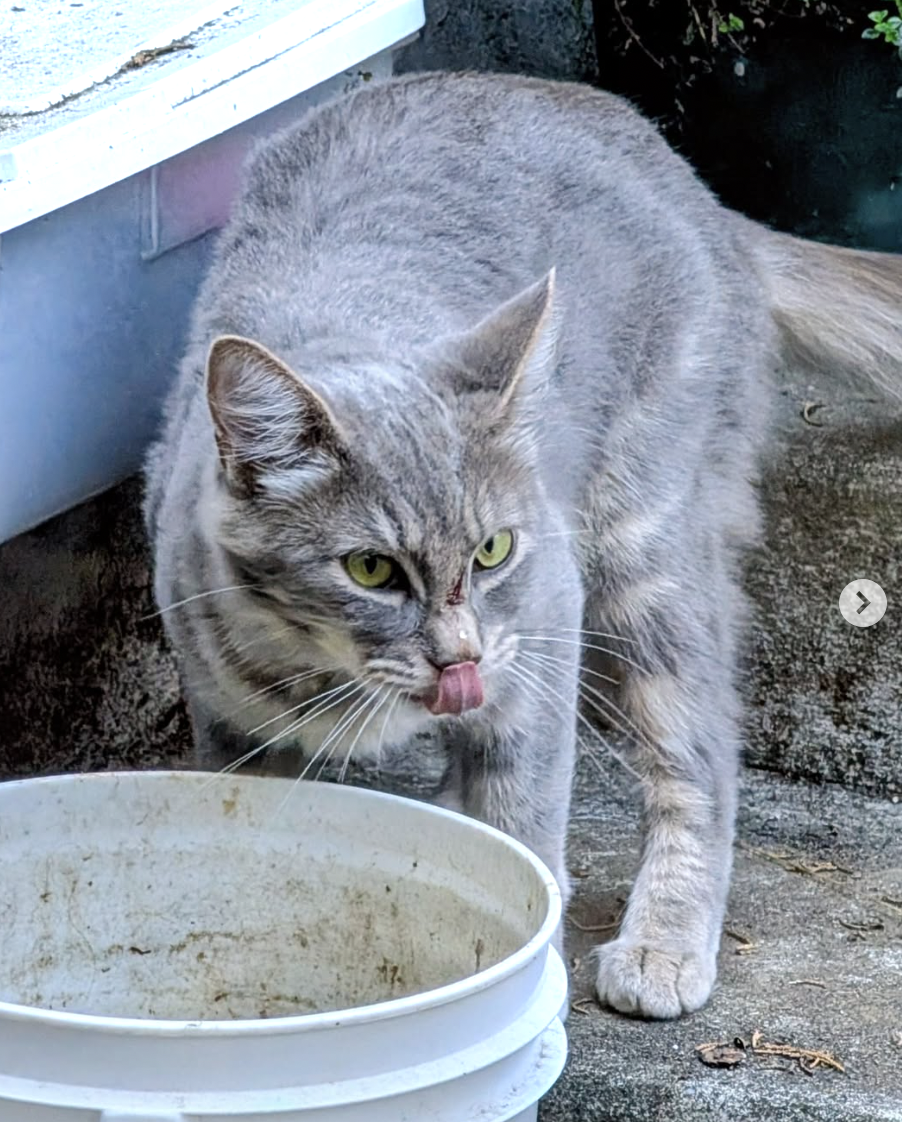
I went outside to take a closer look, worried that the kitten might be on its own. A moment later, its Mom, a pearly gray tabby that I’d seen before, emerged and hissed at me for getting too close to her baby. I backed off and went inside, thinking that would be the end of it. 

I have a security camera set up in the backyard specifically to track the comings and goings of various critters, including cats, skunks, possums, raccoons, squirrels, and other rodents. Not long after the daytime kitten visit, the camera picked up Mama Cat showing her kitten around the garden late one night and urging it along with little trills, which female cats make in order to communicate with their children. After that nighttime capture, we didn't see the kitten again, although the mom cat continued her regular visits. 

At this point I was under the naive impression that both Mom and kitten were living in a household with humans. But in December, during a rainstorm, I was laying down to sleep one night when I heard repeated meows coming from the backyard. 

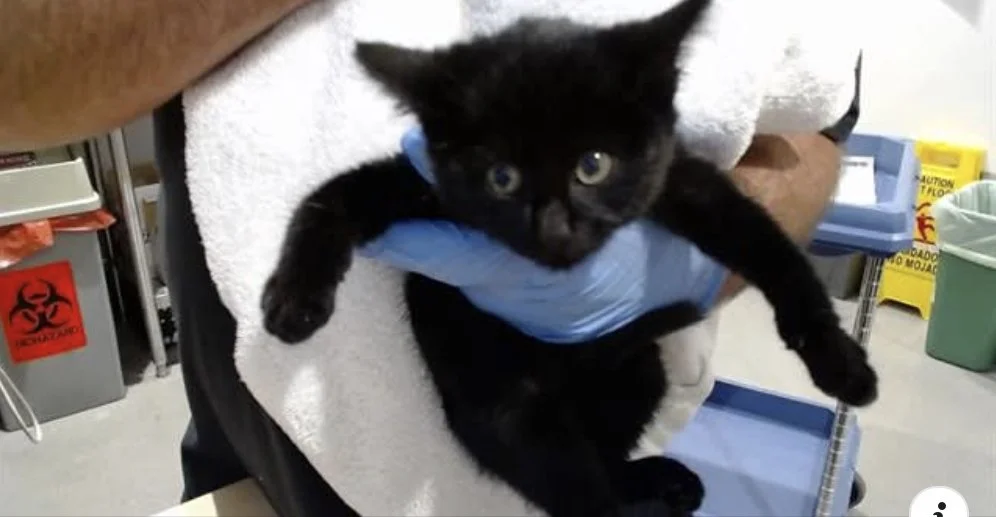
Eventually, I got dressed, grabbed a flashlight and went outside, only to find a tiny black kitten huddled up on top of one of our fences, desperately calling out for its mom. 

D. came out to help and managed to get the kitten down, and we heard its Mom calling to it on the other side of the fence. He tried to put the kitten somewhere where the mom would find it again, and we all went to bed, thinking that would be the end of it. 

Mama cat, drinking from a bucket on our patio. That wound on her nose has since healed well.

The next day, though, we could still hear the kitten calling for its mom. It was two houses over from ours, and it seemed clear that Mom was not going to be able to get it back to wherever they were living. 

I went door to door to see whose backyard the kitten wound up in. Normally in San Francisco, we're pretty wary of strangers coming to our doors, but when there's a kitten involved, suddenly everyone becomes very friendly and curious and helpful.

The kitten was hiding beneath a deck in a neighbor's yard. It took a while, but with the help of some tinned fish from the neighbor, we lured it out and D. grabbed it and put it in a cat carrier. I called Animal Care and Control since it was a Sunday and the SFSPCA was not open, and ACC took it in. They discovered that the kitten was a boy, and estimated that he was about 9 weeks old. 

A couple of days later, he was taken in by a volunteer who fosters kittens. I don't know what happened after that, but I hope and assume that he was adopted by a family that is loving him very much. 

By this point, it was becoming clear that both the kitten and his mom were strays, probably living in a corner of somebody's backyard or corner of the garage that nobody checks all that often. I reached out to the SPCA to have them put me in touch with volunteers who help take care of stray cat communities. 

One important aspect of this work is called TNR, for trap-neuter-release. The idea is that you trap a stray or feral cat, neuter it to keep it from adding to the feral population, and then release it back into the community. The conventional wisdom is that when you remove a cat from an existing cat colony, another one will move in — and it also may need sterilization, so it's better to return an already established cat back into the same community. 

The volunteer helped set me up with a trap and a process of luring the mom cat back to the yard regularly so that we could trap and neuter her. She turned out to be quite easy to lure, putting regular food out day and night and then putting it deeper and deeper into the trap so that she would become comfortable. We trapped her within a week or two. 

Bob.

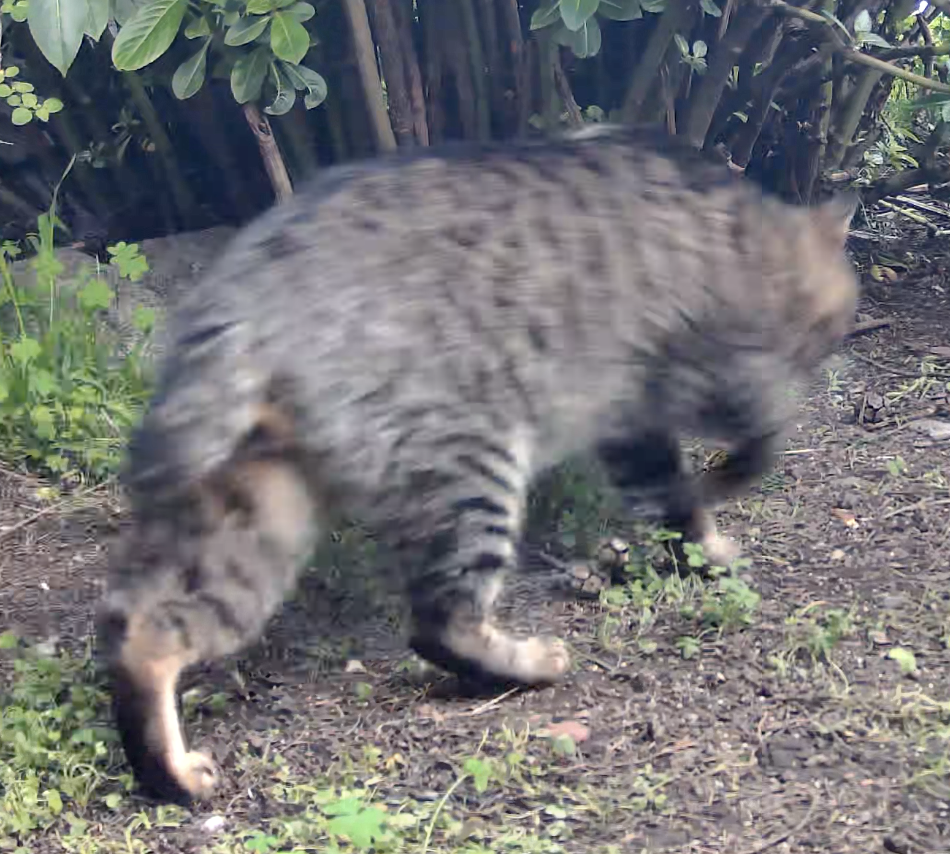
One interesting wrinkle is that she was occasionally bringing another cat that we'd seen before, a large tabby tomcat with a surgically shortened tail that a neighbor of mine decided to name Bob because of his bobtail. Bob was there the night that we got the mom cat in the trap. He came back at least once that night to check on her before she could be picked up the next morning. In retrospect, he’s probably her mate, and the father of the black kitten on the fence and the gray kitten we'd seen the previous summer. 

Once the mom cat got neutered and was staying with humans, it became quite clear that she had been domesticated before. She was really friendly with everyone who took care of her. So the original plan to release her back into our neighborhood was abandoned in favor of trying to find her a forever home, and she wound up being adopted by a neighbor of the volunteer who had helped me trap her. 

She now lives in their household, and is friends with their golden retriever, though she is clearly the head of the household at this point.

Meanwhile, we tried for weeks to lure Bob around often enough that we could get him in a trap, since he's probably responsible for at least two litters of kittens, but he doesn’t come around often enough to get into the habit of eating kibble in our yard. 

More recently, I've spied glimpses of a mature kitten, not quite a year old, with the same coloring as the mom cat. She is probably the gray kitten that I first saw through the window last summer. We've had little luck trapping her, either, especially since one of our friendly neighbor cats who likes to hang out and hunt in the garden got into a massive fight with her and chased her away. 

We still see Bob occasionally, but we haven't seen the daughter since that fight. If either begins coming around more often, we’ll try again.

Have you ever had stray or feral cats visit your yard? Did you ever trap/rescue any? Or make friends with them? 


Four Cemeteries on my ‘Bucket List’ by Beth Winegarner

As Halloween and Samhain draw near, I’m thinking a lot about the cemeteries I’d like to visit. All of them are places where my ancestors are buried; I’ve also got a long mental list of “destination” cemeteries where nobody I know is buried. Maybe that’s a post for another day.

Sleepy Hollow Cemetery, New York

One of my ancestral lines that I’ve been able to trace back quite far is the Storm family, who lived in the Netherlands for many generations before Dirck Goris Storm (1630-1716), my 10th great-grandfather, immigrated to the U.S. in 1662. He eventually wound up in a new, small town called North Tarrytown on the eastern banks of the Hudson River, and later wrote the history of the Old Dutch Church in North Tarrytown. A man after my own heart.

I wrote a longer post about him in 2020, but he died long before Washington Irving came to visit and made the town famous. It later officially changed its name to Sleepy Hollow and the old cemetery (pictured above), where many Storms are buried, has become a tourist attraction. I recently learned, thanks to my friend Loren Rhoads, that the Ramones filmed their video for “Pet Sematary” here, too. 

White House family graveyard, Virginia

The White House in Luray, Virginia. Photo courtesy the Virginia Department of Historic Resources.

Another cluster of my ancestors were Mennonites who immigrated to the U.S. from Switzerland in the early 1700s, settled in Pennsylvania for a couple of generations, and then established a community in the Shenandoah Valley in a place now called Luray. My fifth great-grandfather, Martin Kauffman, Jr., built a meetinghouse called the White House that still stands today.  

A small family graveyard was established next to the White House, where several of my ancestors and their families were buried. I recognize so many names on the gravestones: Brubaker, Roads, Albright, Strickler and Martin himself, along with his father, Martin Kauffman Sr. 

Downpatrick Second Presbyterian Church, Northern Ireland

My second great-grandfather, James Corry Nesbitt, came to the U.S. in 1866 (three of his brothers also immigrated within about a decade of each other). But the rest of his family remained in Northern Ireland, particularly in and around a small region called Tyrella

There’s a memorial stone to these ancestors in the churchyard of the Second Presbyterian Church in Downpatrick, including James’ parents, William Nesbitt and Margaret Corry; his siblings, George, Alexander and Robert, and his grandparents, Robert Nesbitt and Jane Cochrane. There are markers for 24 Nesbitts here, and I’m probably in some way related to all of them. James Corry Nesbitt, his wife, Elizabeth Woollard and their kids are buried in Green Lawn Cemetery in Franklin County, Ohio; another stop on my wishlist.

Old Roswell Cemetery, Georgia

My second great-grandfather, Zachary (or Zachariah) Taylor Jones, Sr., was a significant patriarch on my mom’s side. He was the second-oldest of 10 children, born in 1849 in Roswell, Georgia, where he lived his entire life. He worked as a farmer and also served as the town constable. He married three times and fathered a total of 19 children. 

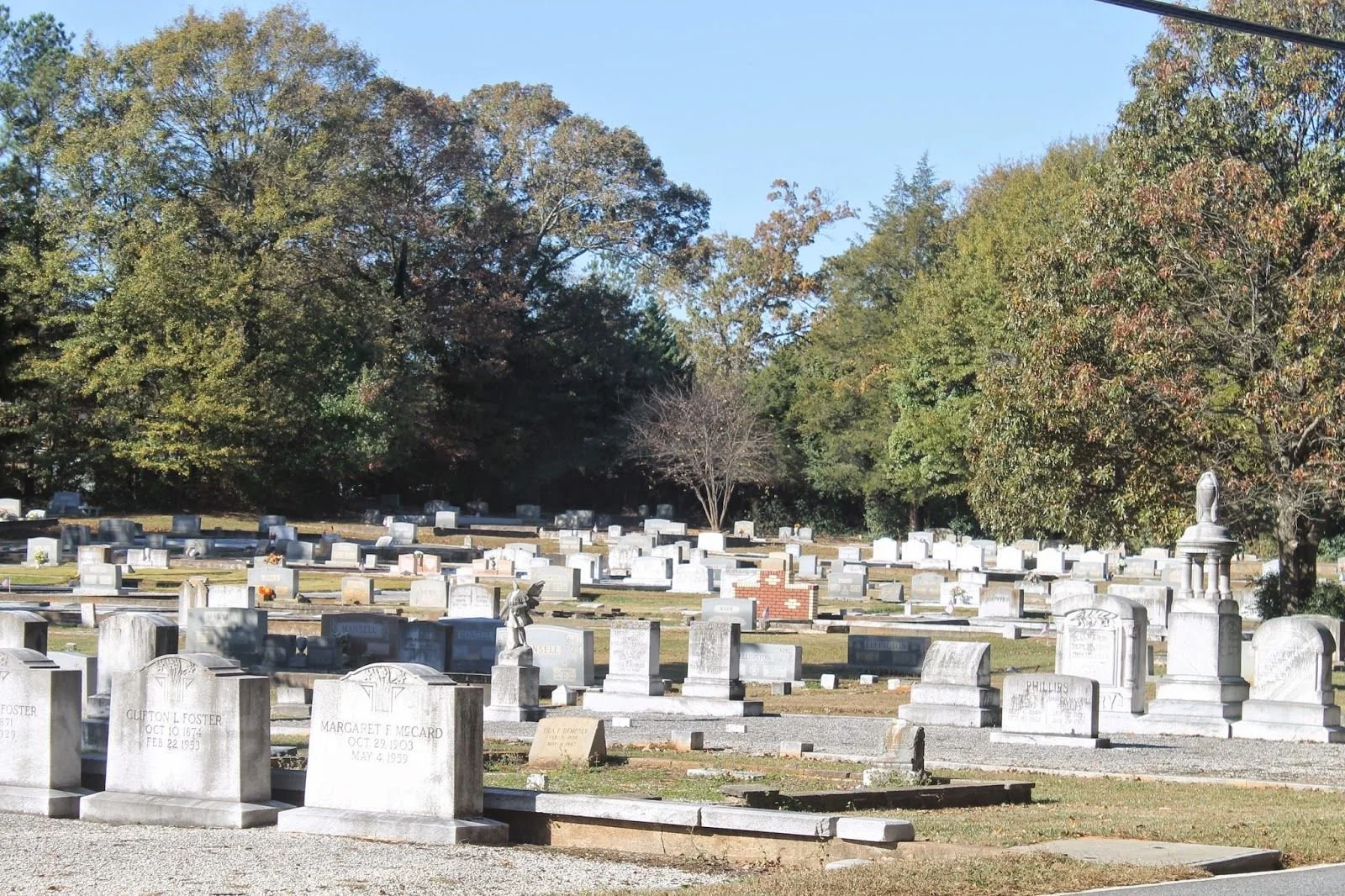
He’s buried in the Old Roswell Cemetery, along with all three of those wives (Mamie Hunnicutt, Alice Bruce, and my second great-grandmother, Lucretia “Cressy” Perkins) and most or all of his children, including my great-grandfather, Bartow Jones. I’m especially grateful to the Roswell Historical Society’s Cemetery Project, which is restoring and replacing grave markers with the help of donations. 

I hope you’ve enjoyed this quick virtual tour. What cemeteries — ancestral or otherwise — would you like to visit?

Míle Buíochas, a Chara: Manchán Magan by Beth Winegarner

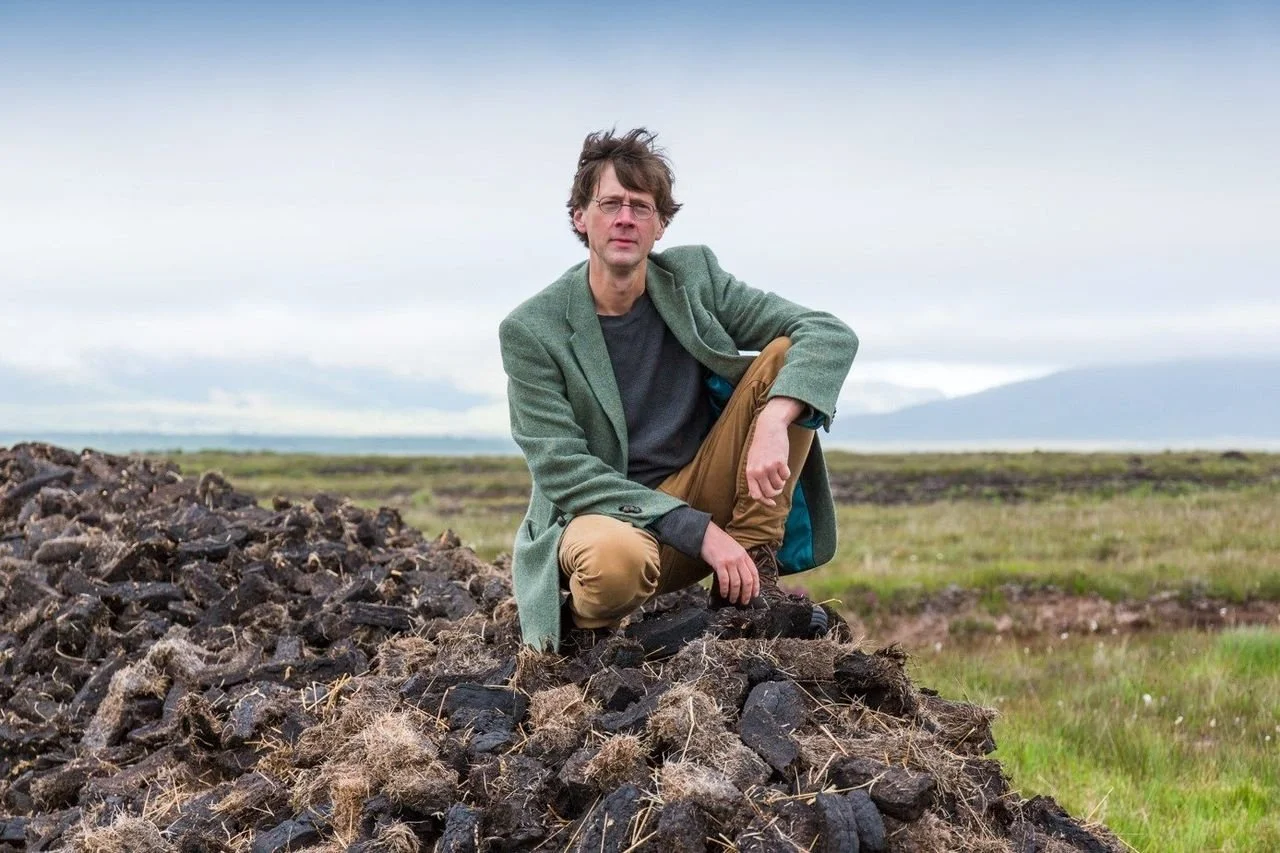
I was devastated to learn last night that Irish writer and broadcaster Manchán Magan died on Oct. 2. It seems impossible; he was only 55, and had so many plans ahead of him. 

I first encountered Magan’s work around 2020, when I began learning the Irish language on Duolingo (not the best platform for it, but that’s a conversation for another time). He was a vigorous spokesman for the Irish language, and for bringing it back in a way that went far beyond the rote learning students get in Irish schools, making it enchanting again.

A little background: Irish developed from the language the Celts brought to the island when they settled it sometime between 2400 and 2000 BC. It has been in use ever since, and was the primary language of Ireland until the English began colonizing the country. Speaking Irish in public became illegal, and all schooling, government communication and legal affairs were conducted strictly in English.

British rule was less absolute in portions of Ireland, particularly the far-Western areas, and the Irish language survived here, in places collectively known as the Gaeltacht. Those regions have continued to shrink over the decades. 

In 2003, the Irish government signed the Official Languages Act (Acht na dTeangacha Oifigiúla), reclaiming Irish as an official language of the island. 

Four years later, Magan traveled around Ireland, testing how far he could get speaking Irish, and recorded the results for a four-part series called “No Béarla” (“No English”). 

I watched the series shortly after I began my studies, and was both amused and horrified by moments like the one in which Magan tries to buy condoms in a drugstore, or when he sings bawdy songs in the streets of Galway to see if anyone understands just how filthy he’s being (mostly, no). 

I began following Magan’s work online at that point, and discovered he was working on a wealth of projects that tie Irish language, culture, folklore and landscape together in ways that resonate with me deeply. 

Off and on for years he hosted the Almanac of Ireland, a Radio Telefis Éireann podcast that considered bogs, sacred wells and Irish foods as well as numerous artists, mythologers and elder storytellers.

He gathered forgotten words from Ireland’s fishing communities and shared them in a project he called “Sea Tamagotchi.”  (For example, the word for the “sucking of the ocean at the shore during large tides of spring and autumn [that is] particularly noticeable at night” is suaitiú.)

In the fall of 2020, he released “Thirty-Two Words for Field,” which focuses on how Ireland’s language and landscapes are tightly interwoven. I devoured this book when it finally arrived in the U.S., and it remains one of my favorite books of all time.

He’s released a few wonderful picture books, including “Tree Dogs, Banshee Fingers and Other Irish Words for Nature” in 2021 and “Wolf-Men and Water Hounds: The Myths, Monsters and Magic of Ireland” in 2023. (Did you know that the Irish call jellyfish smugairle rón — literally, seal snot?)

In 2022 came “Listen to the Land Speak,” in which Magan takes the reader on a journey across Ireland, investigating ancient place-names and the myths they reference. In particular, he talks about the rivers of Ireland as goddesses, places where visitors can communicate with the divine (or be disappeared into another world, if they aren’t careful). 

Unlike many other men of his (or really any) generation, Magan celebrated the feminine in language, landscape and mythology. 

“We fell head over heels for this man who taught us the vaginal nature of the sacred passages all over Ireland, and how much worship we must bring with us into the womb of the Earth. I will never forget the relish with which he spoke of women’s divinity, and the sparkle in his eye when he spoke of love,” writer and activist adrienne maree brown wrote on Instagram this morning. 

I recently acquired Magan’s book “Focail na mBan” (“Women’s Words”), a collection of Irish words for vaginas, vulvas, clitorises and periods that he collected over the years, to give Irish women back the language around these parts of our bodies. I haven’t yet read it, but will likely savor it this weekend while thanking this writer for all he offered. 

Magan was diagnosed with prostate cancer a couple of years ago, and he revealed in September that it had metastasized to just about every part of his body. He thought he might have a year or two more, or at least a few more months. It turned out he only had weeks. 

Cancer is a real bastard. Especially this year, somehow. 

Katie Greenwood Ross — who created music and art under the name Thistle Thistle — died in May of breast cancer. She was only 34, and such an amazing bright light in the world. Before her death, she wrote, “I feel very fulfilled. I feel like I did great stuff with my life. I feel like I was a very prolific guy. And I feel proud of myself and what I have done.” 

And then went the incredible poet and empathy-generator Andrea Gibson, who died of ovarian cancer in July. Their writing taught readers how to open their hearts, to soften, to find wonder and awe in the everyday. Just before they died, they said, “I fucking LOVED my life.”

And now Manchán Magan. I am so grateful to have lived at the same time as him, Andrea and Katie.

In a recent interview, Magan said he wasn’t afraid of death. After death, he predicted, "[I will] remember all that other life I've been, all that being I've been for thousands of years beyond the physical body, the times that I wasn't in the physical body. And I'd say pretty soon again, I'll probably come into another body to continue this work.”

Where I've Been and Where I'll Be by Beth Winegarner

I know it’s been ages since I’ve updated here. Frankly, my mind was a little fried after finishing the San Francisco Magdalen Asylum names project, which got a nice writeup from KQED’s Rae Alexandra.

May was hectic and, in the midst of it, Courtney Minick (Here Lies A Story) and I began recording episodes of our new podcast, Dead Reckoning (“where death isn’t the end of the story!”). Court and I became friends while I was writing “San Francisco’s Forgotten Cemeteries,” because we’re both fascinated and nerdy about the same stuff, and we love talking to each other about it. You’ll see as you listen to the first three episodes:

  1. “Yerba Buena Cemetery: Everyone had broken noses”

  2. “Fort Mason Burial Pit: The world’s worst layer cake”

  3. “The History of Medical Cadavers: Never enough bodies”

Please listen — I really hope you enjoy these conversations as much as we enjoyed having them. More are on the way, too, so subscribe if you like what you hear.

This spring, an older poem of mine, “False Clover,” was published in a UK collection called “Ten Poems About Weeds” (order here). And in June, I had a new poem, “Red Deer,” published in Nonbinary Review (order here). I’ve been writing a lot of poetry this year and I’m excited to share more as it comes out.

Even though I was a bit done with the Magdalen Asylum for a while, it wasn’t done with me. In August, FoundSF (a great resource for locals interested in our history) published a piece I wrote about my efforts to determine whether our laundry hid a mass grave like some of those in Ireland did. You can read it here.

This month, I have a short story, “I Would Breathe Water,” in the Limbo issue of Club Chicxulub. It’s a modern retelling of Scottish/Orcadian selkie folklore. I rarely write fiction, so it’s a real treat to share this story (written in 2022, I think) with you.

Also, this month and next, I will be appearing at a few events, online and in person. Here are the details:

Friday, Sept. 19, 11 a.m. Pacific: “Dying in the Margins: A Closer Look at Funeral Poverty” (online) with Beth Winegarner, Amy Shea and Evie King, hosted by The Order of the Good Death. Join us for a powerful conversation on funeral poverty and the stark inequalities that shape how we die and how we’re remembered. Register here and go deeper here (PDF).

Thursday, Oct. 16, 6 p.m.: “A Book Tour of Cemeteries.” Beth WInegarner, Amy Shea and Loren Rhoads will read excerpts from their work on death and cemeteries and hold a lively conversation about respect for the dead and the importance of memorialization. In person at the San Francisco Columbarium, 1 Loraine Court, San Francisco. Register here.

Saturday, Oct. 25, Lit Crawl (time and location TBD): “Campfire Stories and Other Ghostly Narratives.” Beth will read at Lit Crawl, the final event in San Francisco’s annual Litquake, along with fellow writers Rowena Leong Singer, Sezin Devi Koehler, Doug Henderson, Jennifer Christgau and Jenny Qi. Keep an eye on my Instagram feed for details.

Consciousness, memory, retrograde by Beth Winegarner

If you’re not interested in astrology, bear with me for a minute.

Astrologically speaking, Mercury is currently retrograde. This means that from our vantage, it appears to be moving backward through the skies. Mercury is the planet of communication and technology, and during these phases, astrologers advise double-checking your emails and travel plans, and being more conscious of how you speak to others and how you listen to and read others’ words. 

Mercury went retrograde on March 15. Three days in, the morning of March 18, my mobile phone started rebooting itself over and over. It was a Pixel 6a, a few years old, and many of my past Android devices have kicked off their death processes with the dreaded boot loop, so I began making plans for its demise. 

I was born with Mercury in retrograde, and I sometimes have this internal debate over whether this makes Mercury-retrograde periods easier on me than on others (with the occasional minor crisis, like this one), or if it just puts me in some kind of perpetual, low-grade communication/technology miasma. The jury’s still out, but I did manage to hardlock my laptop by connecting a game controller a day or two after my phone started glitching.

D. managed to get my 6a out of the loop by putting it in airplane mode, but that evening, while we were trying to manually back up my photos, its touchscreen began reacting erratically and, while we were both in another room, my phone spontaneously blared an alarm and called 911. 

My phone was literally calling for help! All the same, I’m grateful the local dispatchers didn’t send an ambulance to the house. 

I ordered a new phone the next morning. While I waited for it to arrive, I thought a bit about phones as conscious beings; the hardware as the body, and the software, apps and all of our personal touches as the soul. I’m someone who strives toward animism, the idea that everything — plants, stones, clothes, coffee mugs — has a soul, or some kind of independent consciousness. I often imagine, for example, what the pebbles and gravel in our roads and freeways think about; how they feel about their current circumstances, and what they remember about their lives before they were turned into pavement. 

Our phones are made of so many disparate materials. In mine, the aluminum housing is made from recycled aluminum, but the original ore is mined in Eurasia. The glass screen is made of sand, soda ash and limestone, abundant materials that have been with us for millennia, if not predating humans entirely. The silicon in the chips is forged from sand and quartz. 

And then there are the rarer ingredients. Indium gives touchscreens their ability to respond to your fingertips; tantalum prevents internal components from corroding; yttrium and others make phone screens more vibrant and luminescent. The batteries run on lithium and cobalt, while other components glitter with gold, silver, platinum and palladium. 

What is the consciousness in each of these components? What souls do they carry?

Over the weekend, I heard a talk by New Zealand artist and author Charlotte Rogers, whose animism embraces the idea that objects contain not only consciousness, but memory. I brought up the disparate elements in mobile phones, and she remarked on the fact that many of those elements are mined unethically, without respect for the earth or the miners, some of whom are children. She asked: If these components have the capacity to remember, what do they remember about the process of being extracted in this way, and what does it mean for us to hold such an object in our hands, or press it to our ears? 

Look, even if you don’t believe in animism, it’s an interesting mental exercise. Give it a try.

When my new phone arrived, I was able to copy everything from the 6a onto it, connected by a USB cable like an umbilical cord or blood transfusion, soul moving into a new body. I factory-reset the 6a and sent it back to Google to be refurbished and, perhaps, reincarnated with a new buyer. I hope whatever frightened it — whatever caused it to reboot, glitch, and call for help — is over now. 

Corseted scapulae and dead butt syndrome by Beth Winegarner

Ever since I was a teen, people have been telling me to fix my posture, particularly chiropractors and physical therapists. Just sit straighter. Picture a string attached to your sternum, lifting it up. Pull your shoulders back. But it always hurt so much to try.

My new physical therapist has a better explanation: The muscles at the front of my shoulders and across my chest are strong and short, while the ones in my upper back are long, floppy and weak. The solution? Work those trapezius muscles, named for the geometric shape they make on our shoulders and backs, and they will strengthen and shorten. 

The distance between each shoulder blade and the spine should only be a couple of inches, she says. My gap is much wider than that. I am tempted to punch grommets along the inner line of my shoulder blades and lace them together across my back, like a corset. 

Humans work those muscles by reaching overhead for things, something we don’t do as often these days. I imagine our ancestors picking fruit from trees, layering hides over wooden frames for shelter. But I also point out that, at 5 foot 2, I still have to do a lot of reaching, even to gather food off the shelves in the grocery store or my kitchen. She concedes the point, but still urges me to do the exercises.

She also tells me that I have a tendency to lean back when I stand or walk. It’s no wonder it hurts to pull my shoulders back further or puff my chest out. My whole torso needs to move forward, not further back. 

It’s similar with my hips, which have been hurting for years. The muscles at the front of my hips, particularly the tiny tensor fascia lata and the larger rectus femoris, have been doing all the work of stabilizing my hips (and body!) while my glutes do fuck-all. 

She tells me about “gluteal amnesia,” AKA “dead butt syndrome,” in which our important booty muscles have forgotten that they have a job. It’s a major cause of gluteus medius tendinopathy, which I definitely have and which has been the source of much of my hip pain. 

As I try the exercises she gives me to wake my butt back up, I find that my glutes really have forgotten. When I try to use them, the tensor fasciae latae say, “here, let us do that,” and then they hurt because they’re already doing too much. It’s a bit of mental gymnastics to use the sleepy muscles while quieting the overachievers. 

It reminds me of those group projects in school, in which one or two people do all the work while the slackers claim their share of the credit. 

All of this is a byproduct of a life spent sitting at computers and on sofas, curled up like a prawn, hunched into a defensive posture. And in the world we live in, who can blame me? I think of my therapist, encouraging me to stand with my arms on my hips like Wonder Woman or spread in a tall V, like a champion. It always felt silly but she assures me that such postures make us feel more powerful and confident. 

I’m firmly middle-aged. It feels like my muscles and connective tissues are turning into jerky and my body is screaming for estrogen (did you know that the joints in our bodies have estrogen receptors?) It feels good to find a physical therapist who understands bodies in a more holistic way. As much as I resent doing daily physical therapy exercises, I’m hopeful that this process will help my butt and upper back lose their amnesia before it’s too late. 

Communing With the Dead by Beth Winegarner

Rows of headstones in a cemetery with flowers. Photo by Anton Darius on Unsplash.

Patrick Wolf, one of my favorite musicians, recently released a new single, “Dies Irae,” that imagines what he and his family could have done together to celebrate their connections in the days before his mother died of cancer. She was a painter, and he asks her to “show me your unfinished painting; What bird here were you intending?” Later he suggests she go dance with his father in the kitchen: “You’ve been his religion and his joy … it’s later than he thinks.”

My own mom died when I was 22, 29 years ago in January, and I didn’t really get to say goodbye to her. My spring semester at UC Berkeley had started a week before her death, so I’d said goodbye to her in the hospital, but it was a casual “see-you-soon” hug and farewell, not the proper goodbye I wish I’d had. 

Wolf’s new song has me imagining what I’d want to include in a “last good day” with my mom. Granted, I’m much older now and the things I think I’d want aren’t necessarily the things my 22-year-old self would have enjoyed, but I think I can find some common ground with my younger self here.

Some ideas: 

  • Listen to music together, maybe the Traveling Wilburys or Pink Floyd or Twisted Sister (yes, she was into all of them). 

  • Eat some ice cream

  • Tell bad puns and stupid jokes and laugh

  • Sew together, quilting or embroidery or something along those lines

  • Go through family photo albums and see if she’d tell me stories

  • Ask her to tell some favorite memories from my childhood

  • Hug a lot

Last week, I went back to UC Berkeley to visit the library and watch a DVD that they have in their collection, a short documentary, “Shellmound,” made by UC Berkeley Graduate School of Journalism Alum Andres Cediel. I haven’t been on campus in years and going back there is like digging back through everything I went through in my brief two years at the school, including my mom’s death. 

“Shellmound” is about another kind of digging: The construction of the Bay Street Mall in Emeryville, on the site of a massive Ohlone shellmound, a burial ground for thousands of indigenous people who lived in the East Bay before European settlers arrived. I knew about the burial ground when D. and I lived in Oakland in 2001 and 2002, and the documentary makes it clear that hundreds, if not thousands, of indigenous people are still buried beneath the shopping center. I may write or talk more about the documentary at another time, but I encourage everyone to watch the trailer here

As I emerged from the basement at Doe Library where I watched the film, I encountered displays of experimental books, including one by artist Stephanie Gibbs entitled “Amissa Anima: A Book of the Dead.” According to the text accompanying the display: 

Stephanie Gibbs, Amissa Anima: A Book of the Dead (Los Angeles Stephanie Gibbs, 2016), printed paper, glass bottles, and mixed materials in cloth-bound box, N7433-4.6447 A83 2016, Art History Classics Library, University of California, Berkeley.

An artist's book is an experience. Here, Gibbs has created a kit to commune with the dead, featuring items ranging from historical photographs to a candle and Ouija board. The kit also includes bottled emotions. "Hope (kindling of)," for example, is represented by a matchstick. Gibbs imagines her audience not as viewers but as participants. This work also demonstrates how ephemeral artists' books can be. Items such as the candle will be consumed when put to use. The collector must make a choice: engage in the full experience intended by the artist and use up some of the artist's creation, or imagine the experience and keep the creation pristine.

Following my experience with the documentary, and appearing among these recent thoughts of death and mothers, this display felt as though it were speaking to me directly. Just like this artists’ book, life is so ephemeral. You can engage in the full experience, or you can try to keep it protected under glass. It won’t last either way you approach it, but one path will leave you with fewer regrets and resentments (shards). 

Memento mori by Beth Winegarner

Let me tell you about the first time I saw Death.

Not the grim reaper, not the rider on the pale horse, but the petite goth in the black tank top, back-combed hair and ankh necklace from the Sandman comics, penned by Neil Gaiman and illustrated by Mike Dringenberg. I think about her often, and I’ve been thinking about her almost nonstop since sexual abuse allegations started coming out against Gaiman last year. 

Back in 1994, I was living in a student-run co-op at UC Berkeley and began bonding with a British exchange student, Alison, over our shared love of Tori Amos. She asked if I’d read Sandman; Tori namechecked Gaiman in “Tear In Your Hand,” off her debut album, even before the two became friends. When I said no, Alison pressed the first collection of issues into my hands and told me to come back when I’d finished reading it. 

Graphic novels aren’t usually my favorite way to enjoy fiction, but I was sucked in by the gothic, surreal, moody atmosphere of the stories. And even though the Sandman/Morpheus/Dream is meant to be the central figure of the series, I immediately fell in love with Death, Dream’s older sister, when she appeared in issue #8, “The Sound of her Wings.” 

By the time this character entered my life, Death had already made her mark. I lost a close friend when I was 16, followed by my mother when I was 22. A friend of mine’s mom died when he was 13 and I was 20. Another friend took his own life. Any adolescent sense of immortality had long been stripped away. It felt as though life could end at any moment and, if there was any personification of Death out there, it was indifferent at best, and possibly cruel in its timing.

Sitting in an urban park while Dream feeds the pigeons, Death offers her brother wise advice, but she never pulls rank or condescends. And when she does her job — that is, turning up at the moment of death and escorting people to the afterlife — she is kind and empathetic. In one issue, as she’s arrived to collect a man’s soul, she tells him, “You got what anyone gets, Bernie. You got a lifetime.” Somehow, she makes it sound fair. 

“People feel as pleased to have been born, as if they did it themselves,” Death tells Dream in the 2022 Netflix adaptation of Sandman. “But they get upset and hurt and shaken when they die. And eventually, I learned that all they really need is a kind word and a friendly face, like they had in the beginning.” 

A moment later, she gathers an infant into her arms and tells it, in the gentlest voice, “Yeah, I’m afraid so. That’s all there is, little one.”  

Seeing those scenes, I thought: If that’s what death is like, if she’s the one who comes to take you across, maybe that wouldn’t be so bad.

I was deeply grateful to Neil Gaiman for giving me this character, who I needed so badly. And for giving me the space not to hate, fear or resent death, even as I experienced more losses. 

But my fondness for this character, Death, became more layered and complicated about 25 years ago, when I grew close with someone who strongly identified with Morpheus. Like Dream, my friend was tall, charismatic, shrouded in darkness. I started to feel like the Death to his Dream, the petite, compassionate and patient older sister. And I felt, too, like the Tori Amos to his Neil Gaiman, particularly in the lyrics from her song “Carbon,” where she sings,

“Get me Neil on the line
No I can't hold
have him read
‘Snow, Glass, Apples’
where nothing is what it seems
‘Little Sis, you must crack this,’
he says to me,
‘You must go in again
carbon made
only wants to be unmade.’”

Things began to unravel from there. I brought my friend to see Tori Amos perform live, and when she got to “Carbon,” tears of resonance streamed down my cheeks. But when I turned to my friend, he only gave me a blank look. We weren’t in this moment together; I was in it alone. Soon he started keeping his distance. He engaged in unethical and predatory sexual behavior. Cutting myself off from him was one of the most painful things I’ve ever done.

There’s no way I could have known then that Gaiman, too, was engaging in unethical and predatory sexual behavior (to be clear: Gaiman’s is many orders of magnitude worse). Everything looks different in hindsight. But in hindsight, perhaps the echo between my friend and Gaiman was a clue. 

In the decades that followed, Gaiman’s version of Death continued to feel like a companion, an ally. “On bad days, I talk to Death constantly,” Amos wrote in the introduction to a collection of comic issues focusing on the character. She meant it more in the way of serious depression, but I felt it more in the way I was drawn to graveyards and history, particularly the histories of forgotten dead. Other personifications of Death — Hades and Hel, in particular — turned up in my dreams, though that’s a story for another time. 

I fell in love with Death all over again when the Netflix adaptation of Sandman came out. Kirby Howell-Baptiste infuses her with a grounded warmth and wisdom that makes her feel more real than ever. The fact that a longtime friend of mine (one I met 30 years ago through Tori Amos fan communities) is a writer and producer for the series is a serious bonus. And I’m excited for the next season, due out later this year. 

When the truth about Gaiman started to emerge, I gave away most of my copies of his books. But I’ve held onto the Death stories: “Death: The High Cost of Living” and “Death: The Time of Your Life.” But now I realize those stories may be tainted in other ways. In addition to the sexual abuse, Gaiman also liberally appropriated ideas from other writers, especially Tanith Lee, whose Flat Earth series underlies Gaiman’s entire Sandman premise and pantheon, and whose “Red as Blood,” a retelling of Snow White, is the blueprint for “Snow, Glass, Apples” — the story Amos sung about in “Carbon.” (I’ve loved Tanith Lee’s fairytale versions even longer than I’ve loved Gaiman’s work, but never made the connection.) 

It’s hard to know what to do when something so important to you turns out to be constructed from lies, mirages and charm. I stuck by Buffy even after it turned out that her creator, Joss Whedon, was a creep on set who paid lip service to feminist ideas while firing an actress for becoming pregnant. But again: What Gaiman did is many orders of magnitude worse and, for the most part, I want to make sure none of my money ever gets into his hands again.

And yet, some of the same framework applies. Like “Buffy: The Vampire Slayer,” “Sandman” is a series made by hundreds, if not thousands, of people: Cast, crew, writers, directors, graphic designers and so many others. They deserve to have their work seen and appreciated. They deserve money and accolades for their hard work. They don’t deserve to have that work tainted by Gaiman’s actions; it’s unlikely any of them knew anything about it. 

As for Death and me, I’m not sure what the future holds. I’ll have to keep thinking about it. These kinds of touchstone characters rarely stop being important to us. There’s a way in which I don’t want to let Gaiman and his horrifying actions take her away from me. And I still hope that she — or someone just as kind — is there for all of us when we take our final breaths. 

Slow-stitching my way through 2024 by Beth Winegarner

I did a lot of good things for my nervous system in 2024. I tried craniosacral therapy. I went through listening exercises as part of the Safe & Sound Protocol. I continued with psychotherapy and different kinds of massage. I started somatic tracking meditations. I did a lot of pilates, and began regular cold-water dunks/swims

Also, at least once a week, I engaged in a little slow stitching. Slow stitching is both an art form and a mindfulness practice, in which you hand-stitch and embroider something, letting your intuition and focus guide you, not worrying about perfection or the end result. It’s about the relationship between the stitcher, the thread and the cloth, the feel of the textures in your hands, the beauty of the finished work (or, sometimes, the fact that it’s hideous but you had fun making it). 

Late in 2023, I lucked into discovering Kathryn Chambers’ YouTube channel, where she posted prompts for weekly stitch-alongs throughout 2024. She also opened a really kind and supportive Facebook group for people participating in the prompts, and it was beautiful to see each one interpreted so differently. I did most of the prompts, skipping only a few, but I stitched at least one “page” each week to put into my stitch journals. I filled four journals in 2024 and started a fifth. You can flip through each one with me in the videos below: 

I enjoyed trying so many different approaches and techniques, but there were a few things I returned to, over and over. Weaving blanket stitches into a kind of web was one. Creating circular portals or doorways was another. Often, I combined these two. Sometimes it felt like creating a boundary of protection around myself, and a way through. Other times it was a way to quiet my mind. Sometimes, it was both. 

Portals

I could talk about why this kind of stitching is great for my nervous system: The experience of being in a flow state, the benefits of bilateral activities on the brain. Many people have written or talked about how a slow, laborious process of working with textiles by hand can be incredibly healing. 

I can’t say that I was necessarily “healed” by this practice (I’m not even sure what that means), though I’m grateful for the extended periods of calm it granted me. It’s also just satisfying to make something pretty out of scraps, something you saved from another project, maybe something you hand-dyed, maybe a bit of a favorite but worn-out garment. You can make deeper meaning out of that if you want to, and many people do, but you don’t have to. 

I have had a stash of embroidery threads for a long time. I did a lot of embroidery when I was in high school, including embroidering one of my fictional characters, a red-headed vampire, onto the back of my denim jacket. When my mom died I absorbed all of her leftover embroidery threads and still have some of them (I never would have purchased so many shades of brown on my own). There were times this year, using her threads, when I felt like I was stitching with her. It made me wish I could actually go through Kathryn’s prompts week by week with her. And in some ways, I was.

A lot of people have told me they find my stitch posts on Instagram inspiring, and that makes me feel amazingly good. I’d love to inspire you, too. If you’d like to give slow stitching a try, follow some of the resources I’ve linked to, and let me know how it goes!